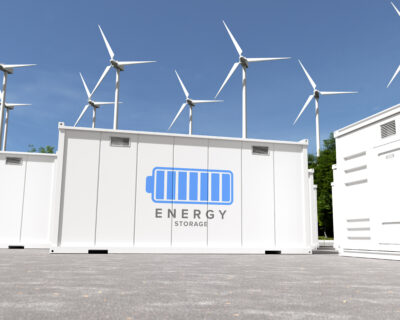
Handling damaged battery storage systems is crucial to ensure safety and prevent environmental damage. Damaged batteries can become even more dangerous due to improper handling or storage. It is therefore important to develop appropriate procedures to handle these batteries safely. Studies show that targeted management of damaged batteries can significantly reduce the risks (Spánik et al. 2).
An effective way to treat damaged lithium-ion batteries is to safely discharge them first before storing or recycling them. This can prevent dangerous chemical reactions from developing. Research suggests that the use of specially designed discharging equipment increases the safety of handling such batteries (Zappen et al. 5).
Regeneration of damaged batteries could be another way to extend battery life and reduce costs at the same time. Experiments have shown that it is possible to restore up to 80% of a battery's capacity if the right regeneration methods are used (Spánik et al. 14). This shows that regeneration is not only economically advantageous, but can also be ecologically sound.
The storage of damaged battery storage systems also requires special attention. Safe storage can help minimize the risk of leaks or fires. Special containers that are resistant to chemical reactions have proven to be effective in ensuring safety during storage (Spánik et al. 2).
Choosing the right storage location plays a crucial role. Batteries should be stored in well-ventilated, cool and dry rooms to minimize the risk of overheating and chemical reactions. Studies show that the ambient temperature has a significant influence on the stability of batteries (Zappen et al. 16).
Another important aspect is the training of personnel who handle damaged batteries. Sound training can help to minimize human error and increase safety. Companies that invest in training report fewer incidents and more efficient handling of damaged batteries (Nogueira et al. 8).
In addition, the recyclability of batteries should already be taken into account during production. By using materials that can be easily separated and recycled, future disposal problems can be minimized. The development of such technologies is crucial to promote the circular economy approach (Nogueira et al. 2).
Overall, dealing with damaged battery storage systems requires a combination of preventive measures, safe storage and targeted regeneration. By implementing these strategies, both safety and sustainability can be improved. Continuous research and development in this area is crucial to finding even more effective solutions (Spánik et al. 2).
The greatest dangers:
- Fire hazard: Damaged lithium batteries can release flammable gases, which can lead to fires or explosions. It is particularly dangerous if batteries are improperly stored or damaged.
- Toxic fumes: If batteries are damaged, they can emit harmful fumes that are dangerous to employees.
- Electric shocks: A damaged battery can emit dangerous voltages that can cause serious injury if touched.
It must be taken into account that the direct current systems are
We help you plan the measures. According to the Employee Protection Act and its regulations, planning, evaluations and instructions are required. (e.g. separate evaluation, release certificates,...)
Literature: (Exemplary)
Spánik et al. "Battery Charging Procedure Proposal Including Regeneration of Short-Circuited and Deeply Discharged LiFePO4 Traction Batteries." 2020, p. 2, https://doi.org/10.3390/electronics9060929. Accessed 10/18/2024.

Zappen et al. "In-Operando Impedance Spectroscopy and Ultrasonic Measurements during High-Temperature Abuse Experiments on Lithium-Ion Batteries." 2020, p. 5, https://doi.org/10.3390/batteries6020025. Accessed 11.6.2024.

Spánik et al. "Battery Charging Procedure Proposal Including Regeneration of Short-Circuited and Deeply Discharged LiFePO4 Traction Batteries." 2020, p. 14, https://doi.org/10.3390/electronics9060929. Accessed 10/18/2024.

Spánik et al. "Battery Charging Procedure Proposal Including Regeneration of Short-Circuited and Deeply Discharged LiFePO4 Traction Batteries." 2020, p. 2, https://doi.org/10.3390/electronics9060929. Accessed 10/18/2024.

Zappen et al. "In-Operando Impedance Spectroscopy and Ultrasonic Measurements during High-Temperature Abuse Experiments on Lithium-Ion Batteries." 2020, p. 16, https://doi.org/10.3390/batteries6020025. Accessed 11.6.2024.

Nogueira et al. "Battery Recycling by Hydrometallurgy: Evaluation of Simultaneous Treatment of Several Cell Systems." 2012, p. 8, https://doi.org/10.1002/9781118365038.ch28. Accessed 5/14/2024.

Nogueira et al. "Battery Recycling by Hydrometallurgy: Evaluation of Simultaneous Treatment of Several Cell Systems." 2012, p. 2, https://doi.org/10.1002/9781118365038.ch28. Accessed 5/14/2024.

Spánik et al. "Battery Charging Procedure Proposal Including Regeneration of Short-Circuited and Deeply Discharged LiFePO4 Traction Batteries." 2020, p. 2, https://doi.org/10.3390/electronics9060929. Accessed 10/18/2024.