Inspection obligations in companies: An overview of fire protection, ÖNORM B 1300 and § 82b GewO
Safe and legally compliant operational management begins with regular inspections and checks. These are not only required by law, but also help to minimize risks and ensure that operating facilities run smoothly.
Three areas in particular play a central role here:
- Fire protection tests in accordance with technical guidelines (TRVB 120).
- ÖNORM B 1300 and annexes that define the requirements for building security.
- Recurring inspection obligations in accordance with § 82b of the Trade Regulation Act (GewO).
1. fire protection tests in accordance with TRVB O 120
TRVB O 120 specifies the self-inspections for operational fire protection. The aim is to identify and eliminate potential hazards at an early stage in order to ensure the safety of people, systems and buildings.
Important test points:
- Fire protection equipment: Extinguishing systems, fire alarm systems, smoke extraction systems.
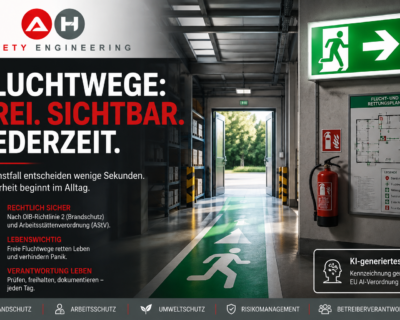
- Escape routes: accessibility, marking, keeping clear.
- Electrical installations: Check wiring and safety lighting.
- Heating systems: Condition and maintenance of fireplaces and flue gas pipes.
- Storage: Compliance with safety distances and quantity limits.
A defect report must be drawn up and the rectification of the defects documented【257†source】.
2 ÖNORM B 1300 - Building safety inspections
ÖNORM B 1300 regulates building security for residential and non-residential buildings. It specifies structural, technical and organizational security measures.
Key aspects of ÖNORM B 1300:
- Technical installations: Regular inspection of elevators, ventilation systems and heating systems.
- Structural safety: Inspection of the building fabric, windows, roofs and fire protection closures.
- Safety lighting and escape routes: functional check and marking.
- Risk assessment: Documentation of all possible safety risks and remedial measures.
As part of these inspection obligations, both maintenance and replacement measures must be carried out and documented promptly. Particularly important: a structured inspection log must be created.
3. recurring inspection obligations in accordance with § 82b GewO
According to Section 82b of the Trade Regulation Act, the owner of an approved operating facility must regularly check or have checked whether the facility complies with the requirements of the approval notice and other trade law regulations【258†source】.
Deadlines for periodic inspections:
- Every 5 years for most operating facilities.
- Every 6 years for installations that are subject to a simplified approval procedure in accordance with Section 359b GewO.
Who is allowed to check?
- Accredited bodies and authorized specialists.
- Civil engineers or tradesmen within the scope of their powers.
- Expert company owners or suitable employees.
Test certificate and documentation:
After the inspection, a detailed inspection certificate must be drawn up and submitted to the authority on request. If defects are found, the system owner must immediately take measures to rectify them and report to the authority.
Important: Inspection obligations at a glance
Regular inspections are the key to safety and compliance with legal requirements. They not only protect employees and operating facilities, but also prevent expensive liability cases.
You need to make sure of this:
- Carry out regular fire protection tests in accordance with TRVB O 120.
- Document and implement property safety inspections in accordance with ÖNORM B 1300.
- Comply with recurring inspections in accordance with § 82b GewO and provide official proof of the results.
💡 O ur tip: Take the opportunity to organize examinations in a bundled and efficient manner. Professional support ensures that you meet all requirements on time and in full.
Do you have questions about inspection obligations or need support with implementation?
Get in touch with us! We will be happy to advise you on all requirements in the areas of fire protection, property security and plant licensing.