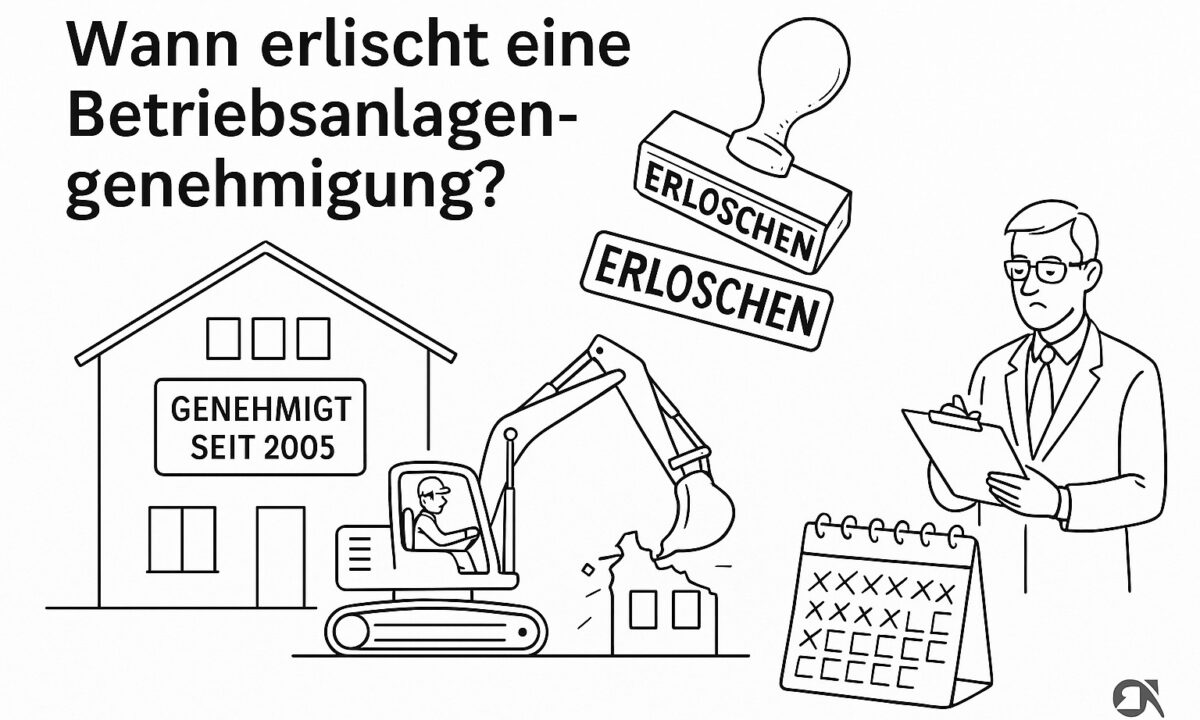
The operating licenseis the foundation of legal operations for many companies. But what many do not know: Once a permit has been issued, it is not automatically valid "forever". Under certain circumstances, it can expire - and often more quickly than entrepreneurs think.
This topic is currently coming under increased scrutiny because authorities are carrying out more intensive checks and changes in companies are being questioned more frequently. Anyone who is not informed here risks unnecessary shutdowns or costly re-approval procedures.
Reasons for the expiry of an operating license
According to § 80 para. 1 of the Trade, Commerce and Industry Regulation Act 1994 (GewO), a license expires if:
- Operation is not commenced within 5 years of the permit being issued
- The business has been closed for more than 5 years without interruption (non-exercise)
- significant changes are made to the system that lead to a different operating mode or other emissions
- The operating facility is moved to another location
- The system is used contrary to the authorization
Why extinction often goes unnoticed
In practice, it often happens that changes are made "insidiously" - for example, when machines are replaced, additional units are installed or production areas are expanded. Many entrepreneurs assume that such changes are covered by the existing permit. However, if these changes are "substantial" within the meaning of the GewO, the original permit expires automatically - without a separate decision.
The consequences
Operation without a valid permit is at risk:
- Immediate shutdown by the authorities
- Administrative penalties
- Costs for subsequent approval procedures
- Problems with insurance claims (refusal of benefits)
How to prevent
- Carry out regular permit checks and § 82b inspections
(§ 82b GewO obliges the owner of an operating facility to check at least every five years whether the facility complies with the permit requirements and applicable legal provisions) - Have changes checked before implementation to determine whether a new permit is required
- If in doubt, obtain legally binding information from the authorities
- Document all operational adjustments
An operating license is not a static document. Anyone shutting down the business for a longer period of time or making changes to the business must always keep an eye on whether the existing permit is still valid. Timely inspection - combined with the legally required § 82b inspection - protects against unpleasant surprises and ensures the continued existence of the company.